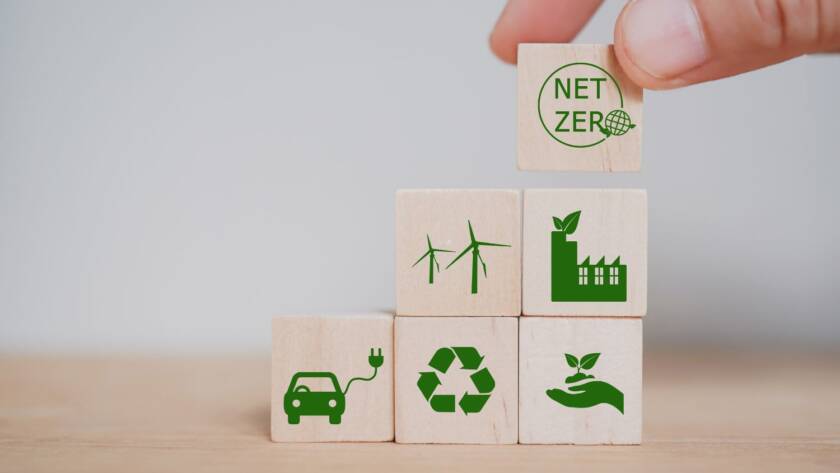
The Science Based Targets initiative (SBTi) has unveiled plans for a significant update to its Corporate Net-Zero Standard, detailing the objectives, scope, deliverables, provisional timeline, and stakeholder engagement opportunities. The revision aims to align with the latest scientific insights, address scope 3 target challenges, integrate continuous improvement, and enhance interoperability with other frameworks. Key steps…
The Australian government has announced a substantial A$22.7 billion ($15.0 billion) investment package to enhance domestic manufacturing and renewable energy sectors. This initiative aims to reduce Australia's dependence on foreign suppliers, boost economic resilience, and position the nation as a leader in the global transition to net zero. Key investments include $3.2 billion for the…
The European Securities and Markets Authority (ESMA) has finalized new guidelines to tackle greenwashing in the investment sector. These guidelines require that at least 80% of investments in ESG or sustainability funds meet specific environmental, social, or governance criteria. The rules also set exclusion criteria for various sustainability-related terms to prevent misleading fund names. Scheduled…
The EU Council has officially adopted new regulations on CO2 emission standards for heavy-duty vehicles, aiming to significantly reduce road transport emissions and promote zero-emission vehicles. The updated rules set ambitious new targets: a 45% reduction in emissions by 2030, 65% by 2035, and 90% by 2040 for medium lorries, heavy trucks, and coaches. Additionally,…
The EU High-Level Expert Group (HLEG) on Scaling Up Sustainable Finance in Low and Middle-income Countries has released its final report, presenting 10 key recommendations to the European Commission. These steps aim to enhance private capital mobilization for sustainable projects, bridging the substantial financing gap for the Sustainable Development Goals (SDGs) estimated at USD 3.9…
The United Kingdom and Singapore have reaffirmed their commitment to advancing sustainable finance and fintech innovation during the 9th UK-Singapore Financial Dialogue. Key outcomes include collaborative efforts to scale transition finance, the adoption of International Sustainability Standards Board (ISSB) standards for consistent sustainability disclosures, and initiatives to mobilize private capital for green infrastructure projects in…
The Biden-Harris Administration has finalized a new EPA rule to strengthen methane emissions reporting for the oil and gas sector, mandated by the Inflation Reduction Act. This rule aims to improve transparency and accountability by using advanced technologies such as satellite data to identify and quantify emissions accurately. This initiative is part of a broader…
According to a recent EY survey, 54% of global CEOs are committed to decarbonizing their businesses to achieve net zero, reflecting a significant rise in prioritizing sustainability over the past year. While CEOs currently focus on AI transformation to enhance productivity, their long-term strategy includes creating new revenue streams aligned with net-zero goals. Despite this…
The London Metal Exchange (LME) is set to require aluminium producers to submit verified carbon emission data by 2025. This initiative, aligned with the EU’s Carbon Border Adjustment Mechanism (CBAM), aims to mitigate carbon leakage and ensure that imported goods incur comparable carbon costs to those paid by EU domestic producers. This requirement will leverage…
The UK High Court has ruled that Britain's Carbon Budget Delivery Plan (CBDP) is unlawful due to its lack of clarity and unrealistic assumptions. The plan, which aims to reduce emissions by over two-thirds of 1990 levels by 2030 and achieve net zero by 2050, was criticized for being vague and not accounting for potential…
A PwC report has revealed that over 70% of critical minerals essential for the net zero transition, such as copper, cobalt, and lithium, could face significant drought risks by 2050 under a high emissions scenario. The study highlights that even under a low emissions scenario, significant portions of the production of these minerals and key…
A new report by the Centre for Research on Energy and Clean Air (CREA) reveals that China has fallen short of its air quality targets, prioritizing economic growth over environmental concerns. Nearly half of the targeted cities missed PM2.5 reduction goals in late 2023 and early 2024. Henan province, particularly the Beijing region, saw some…