A few years ago, if you said “sustainability reporting” at a board meeting, you’d probably get a few nods and a polite “we’ll look into it.” Fast forward to today—and it’s at the center of some of the biggest decisions companies are making.
But here’s what’s interesting: the most forward-looking businesses aren’t just reporting to stay compliant. They’re using it to open doors, reduce costs, build trust, and spot opportunities they didn’t see before.
They’re treating sustainability data not as a record of the past, but as a roadmap for the future.
The Shift That’s Quietly Changing Business Strategy
In any growing company, there comes a point where tracking performance manually just doesn’t cut it anymore. You need systems. You need visibility. And more importantly, you need to understand not just how the business is doing—but why.
That’s what sustainability reporting does when you use it right. It brings the hidden stuff into focus. You begin to see patterns: areas of waste, underperforming assets, or operations that are quietly costing you more than they should. That clarity drives smarter decisions.
And over time, those smarter decisions translate into sharper strategy, stronger teams, and a business that can flex when the market shifts.
It just so happens that much of this visibility comes through the lens of structured sustainability reporting.
Real Data, Real Decisions
According to WBCSD’s 2023 “Reporting Matters” report, 94% of companies included some form of assurance for their sustainability disclosures, and 55% disclosed how double materiality informs their reporting strategies. That shows a growing maturity in ESG reporting—but also highlights how much room there is for companies to strengthen data relevance and usability.

It’s easy to feel like reporting is something you do after the action—like a chore you get to once the “real work” is done. But companies that flip that mindset and use sustainability data as strategic input are the ones pulling ahead.Imagine being able to review all your facilities and pinpoint inefficiencies—so you can make informed choices about where to invest in upgrades or process improvements. Suddenly, you’re not just logging data—you’re uncovering the hidden dynamics of your operations. And with that clarity comes decisions you would’ve missed before.
Customers Are Paying Attention (So Are Your Competitors)
In fact, a 2023 study by IBM found that 73% of global consumers say environmental sustainability is very or extremely important to them. Nearly half are willing to pay more for sustainable brands.

We’re in a world where people care deeply about where their money goes. Whether it’s a client choosing a vendor or a customer picking a brand off the shelf—values matter.
And transparency builds trust. When you show the world what you’re doing (and where you still have work to do), you invite connection. You show integrity.
That trust becomes a moat. It keeps customers loyal, makes partnerships easier, and helps you stand out when everyone else is competing on price or features.
You don’t need to make a whole campaign about your sustainability efforts. Just be consistent, credible, and clear. The rest follows.
Sustainability reports—especially those rooted in real data—become a quiet but powerful trust builder.
One powerful example is Patagonia. Their open and often self-critical approach to sustainability has earned them a fiercely loyal customer base. Patagonia doesn’t just highlight their successes—they publicly share areas where they’re falling short. This level of honesty has helped the brand stand out in a crowded market by building deep, values-based trust with their audience. (See: Patagonia – Our Footprint)
It’s Also About the People Behind the Scenes
Deloitte’s 2023 Gen Z and Millennial Survey revealed that nearly 44% of Gen Zs and 37% of Millennials have rejected job offers or assignments due to ethical concerns with the employer. Sustainability isn’t just about optics—it’s a talent magnet.

Let’s talk about your team for a second. Because if there’s one thing that drives every successful company—it’s people.
In the last few years, job seekers have become incredibly selective. They want purpose. They want to work for companies that are honest, human, and doing something meaningful in the world.
When your sustainability goals are real—and you actually report on them—it creates a ripple effect internally. Employees take pride in their work. They stay longer. And they bring new ideas to the table because they feel invested in the mission.
The result? A culture that retains talent and runs on motivation, not just KPIs.
Small Fixes That Save Big
One of the most underrated benefits of sustainability reporting is how it helps uncover quick wins.
We’ve seen companies reduce costs simply by identifying unnecessary resource use in their operations. Others have found ways to make packaging more efficient, lower logistics costs, or reduce employee turnover—all by examining patterns they wouldn’t have spotted otherwise.
These aren’t million-dollar innovations. They’re small shifts with out sized impact.
Innovation Starts With the Right Questions
You can’t innovate unless you know what’s holding you back.
That’s where sustainability reporting comes in. When you zoom out and look at your business through the lens of long-term impact, you naturally start asking different questions. Better questions.
- Why do we still use X material when Y is cheaper and greener?
- What’s stopping us from digitising this process?
- Are we missing an opportunity by not offering low-carbon alternatives?
When reporting is built into your business rhythm, it becomes a springboard for smarter, faster experimentation. And that’s what leads to growth—not just in revenue, but in capability.
Getting Ahead of the Curve (and Staying There)
Change is coming, whether you’re ready or not.
New regulations are being introduced across major markets. Customers are asking more questions. Investors want clear answers. And companies that wait for everything to become mandatory are going to find themselves playing catch-up.
But the smart ones? They’re already laying the foundation.
They’ve set up systems to track what matters. They’ve started producing reports that are readable, shareable, and backed by data. They’re treating sustainability as a core part of business—not an afterthought.
That proactive approach builds resilience. It helps you respond to new standards quickly, reassure stakeholders, and spot risks before they snowball.
And yes, it also helps you stay compliant—but that’s just the baseline.
New regulations are being introduced across major markets. Customers are asking more questions. Investors want clear answers. And companies that wait for everything to become mandatory are going to find themselves playing catch-up.
But the smart ones? They’re already laying the foundation.
They’ve set up systems to track what matters. They’ve started producing reports that are readable, shareable, and backed by data. They’re treating sustainability as a core part of business—not an afterthought.
That proactive approach builds resilience. It helps you respond to new standards quickly, reassure stakeholders, and spot risks before they snowball.
And yes, it also helps you stay compliant—but that’s just the baseline.
The Right Tools Make All the Difference
Let’s be real: none of this is easy to manage in spreadsheets.
If your reporting process feels like it’s held together by copy-paste and late-night fixes, you’re not alone. But it doesn’t have to be that way.
At EcoActive ESG, we’ve built our platform to take the friction out of the entire reporting journey. You get structured data, auto-alignment with global frameworks, and smart dashboards that make reporting intuitive and actionable. No more digging through files or chasing updates across teams.
We’ve also packed in features we knew sustainability teams really needed: built-in double materiality assessments, automated disclosures aligned with leading ESG frameworks, real-time stakeholder collaboration, and AI-powered tagging. You can maintain audit-ready trails and simplify even the most complex compliance tasks—without losing your sanity.
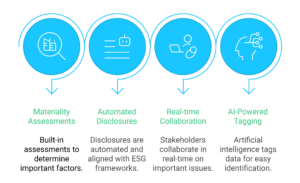
This isn’t just about reporting. It’s about turning your ESG data into something meaningful—insightful, usable, and aligned with your growth goals.
And once you’ve got the right system in place, sustainability reporting becomes less of a burden and more of a strategic advantage.
That’s where the real growth begins.
Final Thoughts: You Don’t Have to Be Perfect—Just Honest, Clear, and Consistent
Growth isn’t about having all the answers. It’s about knowing where you stand, what’s changing, and where the real opportunities lie.
Sustainability reporting, when done right, gives you that clarity. It shows you not just what you’re doing—but where you could go next.
And if you’re serious about building a resilient, future-ready company, that’s an insight you can’t afford to ignore.
With EcoActive ESG, you get more than just software. You get a partner that helps you simplify the process, stay ahead of regulations, and turn your sustainability journey into a genuine business advantage.
Curious how it works? Book a free walkthrough and see how EcoActive ESG can streamline your entire ESG reporting process.