

Integrated iXBRL
Integrated iXBRL in an Agentic AI-Enabled Disclosure Workflow
Connect disclosure preparation and structured digital reporting within one governed workflow. Agentic AI supports the wider disclosure process while taxonomy-based tagging, validation, review, and iXBRL output remain controlled and traceable.
Connect Disclosure With Structured Digital Reporting
Integrated iXBRL brings structured, machine-readable reporting into the disclosure process without separating tagging from report preparation, review, and validation.
Within EcoActive, iXBRL capabilities powered by Ez-XBRL connect approved financial and sustainability disclosures with taxonomy-based tagging, validation, review, and structured digital reporting output.
What is iXBRL?
iXBRL, or Inline XBRL, is an open digital reporting standard that combines human-readable reporting with structured, machine-readable data in a single document.
The document can be viewed normally in a web browser while embedded XBRL tags allow software to identify, extract, validate, compare, and analyze reported information. XBRL International describes iXBRL as a format that combines structured data with the preparer’s chosen presentation within the same document.
Learn more from XBRL International’s introduction to iXBRL.
HUMAN-READABLE DISCLOSURE
Preserve the Report Presentation
Readers see the disclosure in its normal presented form, including narrative, tables, figures, and layout.
MACHINE-READABLE DATA
Add Structure to Reported Information
XBRL tags give reported information a defined digital meaning so systems can identify and process the underlying facts.
XBRL & iXBRL | STRUCTURED DIGITAL REPORTING
How Does iXBRL Work?
XBRL reporting uses a taxonomy to define the concepts used in a digital report. XBRL International describes taxonomies as digital dictionaries that define reporting concepts and the meaning of individual tags. iXBRL then embeds those tags within a human-readable HTML-based document.
The result is: Human-readable disclosure + Machine-readable structured data
WHY STRUCTURED DIGITAL REPORTING MATTERS
What Does iXBRL Add to Disclosure?
Traditional disclosure documents are primarily designed for human readers.
iXBRL adds a structured layer that can also be interpreted by machines.
Machine-Readable Information
Comparability
Validation
Analysis
Consistent Meaning
Data Reuse
ESEF | iXBRL IN REGULATORY REPORTING
Where Is iXBRL Used Today?
iXBRL is already established within financial and regulatory reporting.
Under the European Single Electronic Format (ESEF), applicable issuers prepare annual financial reports in XHTML. Where an issuer prepares IFRS consolidated financial statements, the required information is marked up using XBRL and embedded within the XHTML document using Inline XBRL.
Learn more from ESMA’s ESEF reporting guidance.
EcoActive connects structured reporting with the wider financial disclosure lifecycle.
DIGITAL SUSTAINABILITY REPORTING
How Does iXBRL Relate to Sustainability Disclosure?
Digital sustainability reporting is developing across multiple standards and jurisdictions.
The IFRS Sustainability Disclosure Taxonomy provides digital elements for tagging information prepared under IFRS Sustainability Disclosure Standards. It enables sustainability-related financial information to be represented in a structured, machine-readable format.
Learn more from the IFRS Sustainability Disclosure Taxonomy.
The existence of a taxonomy, however, does not automatically mean every company using that reporting framework is required to file an iXBRL report.
Digital filing requirements depend on the rules adopted by the relevant jurisdiction or regulator.


What Is the Current Position for ESRS Digital Reporting?
EFRAG published an ESRS Set 1 XBRL Taxonomy in 2024 as a digital representation of the original ESRS. That taxonomy was intended to support ESMA’s development of the regulatory technical standards for digital tagging.
Following the European Commission’s adoption of the 2026 revised ESRS, EFRAG began updating both the datapoint list and the related XBRL taxonomy.
As of July 2026, EFRAG was discussing the draft revised XBRL taxonomy through its Sustainability Reporting Board process. Reporting teams should therefore distinguish between: the direction toward structured digital sustainability reporting and the specific taxonomy and tagging requirements applicable to a particular filing period.
HOW IT WORKS
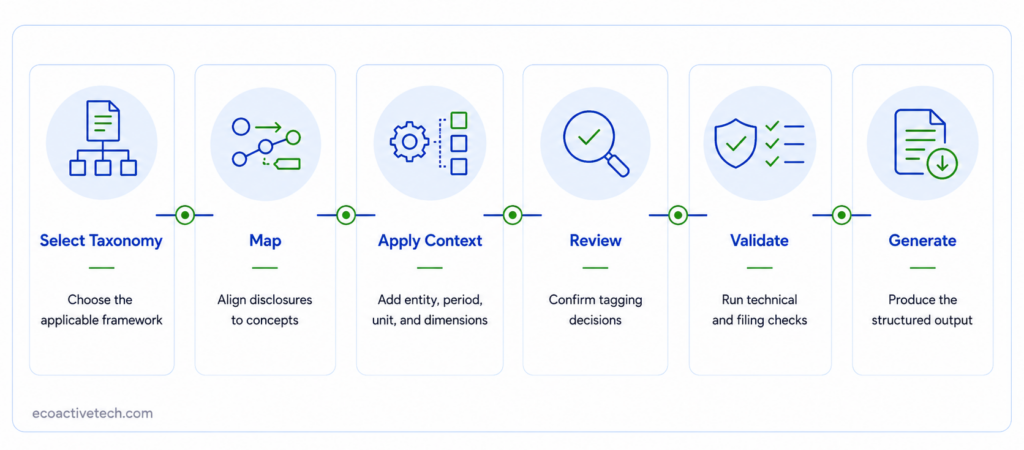
Integrated iXBRL: Step by Step
Structured reporting is easier to govern when tagging is connected with disclosure preparation instead of being added as an entirely separate activity after the report is finished.
1. Prepare the Disclosure
Prepare and review the underlying financial or sustainability disclosure. EcoActive’s ESG Reporting capability connects ESG data, narrative, evidence, reviews, and approvals before final reporting output.
2. Select the Applicable Taxonomy
Identify the taxonomy required for the reporting mandate. Consider:
- Reporting framework
- Jurisdiction
- Regulator
- Filing period
- Report type
3. Map and Tag Information
Map report information to the relevant taxonomy concepts. Depending on the mandate, tagging may include:
- Numerical facts
- Narrative information
- Tables
- Text blocks
- Dimensions
- Entity-specific extensions where permitted
4. Review Tagging Decisions
Review the structured information to confirm:
- Appropriate taxonomy concepts
- Context
- Period
- Units
- Scale
- Dimensions
- Extensions where applicable
Tagging involves reporting judgment as well as technical execution.
5. Run Validations
Validate the structured report against applicable:
- XBRL specifications
- Taxonomy rules
- Calculation relationships
- Filing requirements
- Regulator-specific validations
6. Resolve Exceptions
Review validation messages and address issues before final generation. Keep corrections connected with the underlying disclosure and its review process.
7. Generate Structured Output
Produce the applicable iXBRL or structured digital reporting package after tagging and validation are complete.
This creates a connected reporting path: Disclosure → Taxonomy → Tagging → Review → Validation → Structured Output
How EcoActive Integrates iXBRL Into Disclosure Management
Integrated iXBRL is a capability within EcoActive’s disclosure management platform — not a separate reporting product. It connects structured digital reporting with the content, data, reviews, and governance already supporting the disclosure.
Integrated Tagging Powered by Ez-XBRL
iXBRL capabilities are powered by Ez-XBRL’s structured reporting technology and integrated into the EcoActive disclosure process.
Disclosure-to-Tag Connectivity
Keep tagging connected with the underlying disclosure it represents. This gives reviewers context when assessing structured facts and tagging decisions.
Taxonomy-Based Tagging
Map relevant report information to the taxonomy applicable to the reporting mandate.
Validation
Apply structured-data and mandate-specific validations before final output.
Governed Review & Audit Trail
Keep tagging decisions within defined review and approval workflows while maintaining visibility into validations, reviews, and changes throughout the reporting cycle.
Financial and ESG Connectivity
EcoActive connects financial and sustainability disclosure within the same platform, allowing structured reporting to support a broader disclosure lifecycle
How Integrated iXBRL Connects Across Disclosure
| Reporting Area | Integrated iXBRL Connection |
|---|---|
| ESG Reporting | Connects applicable ESG information with structured digital reporting |
| Financial Disclosure | Supports structured financial and regulatory reporting |
| Report Generation | Keeps structured output connected with the approved report |
| ESEF Reporting | Supports XHTML and Inline XBRL requirements for applicable ESEF reports |
| Review and Validation | Checks tagging, contexts, units, mappings, and applicable filing rules |
| Audit Trail | Maintains visibility into tagging and review activity |
| Digital Disclosure | Produces information that can be consumed by people and machines |
Why Integrated iXBRL Within EcoActive?
01
Structured Reporting Stays Connected to Disclosure
Tagging is connected with report preparation, review, and final output rather than treated as an isolated conversion process.
02
Powered by Structured Reporting Expertise
Integrated iXBRL capabilities are powered by Ez-XBRL, bringing established XBRL expertise into EcoActive’s Financial and ESG Disclosure Management platform.
03
Human-Readable and Machine-Readable Reporting Stay Aligned
Maintain the connection between the disclosure reviewed by people and the structured information consumed by systems. This strengthens consistency, validation, governance, and traceability throughout digital reporting.
Frequently Asked Questions
What is iXBRL?
iXBRL, or Inline XBRL, is an open digital reporting standard that combines human-readable presentation with structured, machine-readable XBRL data in the same document.
What is the difference between XBRL and iXBRL?
XBRL provides structured, machine-readable business information. iXBRL embeds XBRL tags within a human-readable HTML document, allowing a single report to serve both people and computer systems.
What is an XBRL taxonomy?
An XBRL taxonomy is a digital dictionary of reporting concepts. It defines the concepts, attributes, relationships, and rules used to tag information in a structured report.
Is iXBRL used for ESEF reporting?
Yes. Applicable issuers preparing IFRS consolidated financial statements under ESEF mark up required information using XBRL, with the tags embedded in the XHTML annual financial report using Inline XBRL.
What is the IFRS Sustainability Disclosure Taxonomy?
The IFRS Sustainability Disclosure Taxonomy provides digital elements for tagging sustainability-related financial disclosures prepared using IFRS Sustainability Disclosure Standards.
Does the existence of a sustainability taxonomy mean iXBRL filing is automatically mandatory?
No. A digital taxonomy provides the concepts needed for structured reporting, but mandatory filing and tagging requirements depend on the rules adopted by the relevant jurisdiction or regulator.
What is happening with the ESRS XBRL Taxonomy after the 2026 ESRS revision?
EFRAG is updating the datapoint list and XBRL taxonomy to reflect the revised ESRS adopted by the European Commission in July 2026. The revised taxonomy was still being discussed in draft form through EFRAG’s July 2026 process.
How does EcoActive support Integrated iXBRL?
Integrated iXBRL is a capability within EcoActive’s AI-native Financial and ESG Disclosure Management platform. Powered by Ez-XBRL, it connects taxonomy-based tagging, validation, review, and structured output with the wider disclosure process.
Why integrate iXBRL with disclosure management?
Integration keeps tagging and validation connected with the underlying disclosure. This creates clearer traceability between the content being reviewed and the structured information ultimately produced for digital reporting.
Ready to Connect Disclosure With Structured Digital Reporting?
See how EcoActive connects disclosure preparation, taxonomy-based tagging, review, validation, and structured output within one governed reporting process.