

ESG Reporting
Agentic AI-Powered ESG Reporting Software for Governed, Assurance-Ready Sustainability Reporting
Use Native AI and Agentic AI across a governed ESG reporting process to support analysis, validation, review, and repeatable reporting activities while keeping interpretation and final approval under human control.
ESG reporting software helps organizations collect, validate, manage, review and report sustainability information across regulatory requirements and reporting standards.
EcoActive is an AI-native ESG reporting platform with Agentic AI capabilities that connects data, disclosures, evidence, reviews and approvals within one governed reporting process. From ESG data collection and validation to disclosure preparation, review and final report generation, EcoActive helps sustainability, finance and reporting teams manage ESG reporting with greater control, traceability and efficiency.
Manage reporting across ESRS, ISSB, SASB, BRSR, UK SRS, California climate reporting and other applicable jurisdiction-specific requirements without treating every requirement as a separate reporting exercise.
What Is ESG Reporting?
ESG reporting is the process of disclosing information about an organization’s environmental, social and governance impacts, risks, opportunities, policies, metrics and targets.
Depending on the applicable reporting requirement, organizations may need to disclose information relating to:
Climate-Related Risks and Opportunities
Greenhouse Gas
Emissions
Energy Consumption and
Energy Mix
Governance
Material Impacts, Risks and Opportunities
Sustainability Targets and
Progress
Value-Chain
Information
Workforce and
Social Matters
Sustainability-Related Financial Informatio
The requirements differ by jurisdiction.
Companies within the scope of the EU’s Corporate Sustainability Reporting Directive report according to the European Sustainability Reporting Standards (ESRS). The European Commission’s corporate sustainability reporting guidance provides information on the CSRD and ESRS.
The ISSB’s IFRS S1 and IFRS S2 establish requirements for sustainability-related financial disclosures and climate-related disclosures. Learn more from the IFRS Foundation’s introduction to the ISSB Standards.
As these requirements evolve, ESG reporting is no longer simply about producing a sustainability report.
Organizations need a controlled process for determining what must be reported, collecting the underlying information, validating it, maintaining supporting evidence, preparing disclosures and managing reviews and approvals.
That is where ESG reporting software becomes part of the reporting infrastructure.
GENERAL REQUIREMENTS
Why ESG Reporting Becomes Difficult at Enterprise Scale
The challenge is rarely just writing the final sustainability report.
ESG information may come from facilities, finance systems, HR teams, procurement, suppliers, business units and external sources. The same information may be required across several disclosures, while figures and narratives can pass through multiple rounds of validation and review.
This creates several reporting challenges.
Fragmented ESG Data
Multiple ESG Reporting Requirements
Repeated Data Collection
Manual Validation and Review
Limited Traceability
Increasing Assurance Expectations
Manage Multiple ESG ReportingRequirements in One Process
International organizations increasingly face different sustainability reporting requirements across the markets in which they operate.
Instead of building an independent reporting process for every requirement, EcoActive enables teams to manage common data, evidence and disclosures centrally and connect them to the relevant reporting obligations.
| Framework / Reporting Regime | What EcoActive Supports | Official / Further Information |
|---|---|---|
| ESRS and CSRD Reporting | EcoActive supports reporting processes under the Corporate Sustainability Reporting Directive and European Sustainability Reporting Standards, including materiality assessment, impacts, risks and opportunities, data collection, supporting evidence, disclosure preparation and review. |
European Commission – CSRD and ESRS
Explore CSRD Reporting with EcoActive |
| ISSB Reporting | EcoActive helps teams manage sustainability-related financial information required for reporting aligned with IFRS S1 and IFRS S2. IFRS S1 addresses sustainability-related risks and opportunities, while IFRS S2 establishes climate-related disclosure requirements. |
IFRS S1 Requirements
IFRS S2 Climate-related Disclosures |
| India BRSR Reporting | EcoActive supports organizations managing Business Responsibility and Sustainability Reporting and BRSR Core requirements in India through structured data collection, evidence management, reporting workflows, review and disclosure preparation. |
SEBI – BRSR Core Framework
Explore BRSR Reporting Software |
| UK Sustainability Reporting | EcoActive supports sustainability reporting processes aligned with applicable UK requirements. The UK government finalized UK SRS S1 and UK SRS S2 on February 25, 2026. UK SRS S1 establishes the general framework for sustainability-related risks and opportunities, while UK SRS S2 addresses climate-related risks and opportunities. | UK Sustainability Reporting Standards |
| California Climate Reporting | EcoActive helps organizations manage the emissions data, supporting information, reporting workflows and review processes required for applicable California corporate climate reporting requirements. |
California Air Resources Board – Corporate Climate Data
Explore California ESG Reporting Software |
HOW IT WORKS
From Reporting Requirement to Final Disclosure
EcoActive connects the activities behind ESG reporting instead of treating the final report as an isolated document.
1. Determine What Needs to Be Reported
Identify applicable reporting requirements, disclosure obligations and material sustainability matters. Where materiality determines reporting scope, teams can manage the process through EcoActive’s ESG Materiality Assessment capabilities. For organizations reporting under ESRS, EcoActive also supports a structured Double Materiality Assessment covering impact and financial materiality.
2. Collect ESG Data
Assign data requests to the appropriate business units, functions and data owners. Bring quantitative metrics, qualitative responses and supporting evidence into a structured reporting process rather than coordinating submissions through disconnected spreadsheets and emails.
3. Validate Reporting Information
Apply checks and validation controls before information moves into final disclosures. Identify missing information, inconsistencies and reporting gaps earlier in the reporting cycle.
4. Connect Data and Evidence to Disclosures
Maintain connections between reported information and its underlying data, calculations, source documentation and supporting evidence. This gives reviewers greater visibility into the information behind a disclosure.
5. Prepare ESG Disclosures
Bring approved data and supporting context into the disclosure preparation process. EcoActive’s ESG Disclosure Management capabilities help teams manage the information, workflow and controls behind sustainability disclosures.
6. Review and Approve
Route disclosures to designated reviewers and approvers. Comments, changes, evidence and approvals remain part of the governed reporting process rather than being distributed across separate email threads and document versions. Explore EcoActive’s Audit and Review capabilities.
7. Generate the ESG Report
Bring approved disclosures together for final report production while maintaining consistency between underlying information and the reported output. Learn more about ESG Report Generation.
ESG Reporting Capabilities in EcoActive
Materiality Assessment
Identify and prioritize sustainability matters relevant to the organization and its reporting obligations. For ESRS reporting, EcoActive supports both financial and impact materiality through its Double Materiality Assessment Software
ESG Data Collection and Management
Create structured data requests, assign responsibility and track reporting progress across teams and business units. Keep submitted data, supporting information and reporting context connected rather than separating them across multiple reporting tools
GHG Emissions Management
Value Chain Management
Manage ESG information across upstream and downstream value chains. Collect relevant information from suppliers and other external stakeholders, maintain supporting evidence and connect value-chain information to applicable disclosures and metrics.
ESG Target Management
Climate Scenario Analysis
Assess climate-related risks, opportunities and organizational resilience under different scenarios and connect relevant results to climate disclosures.
Energy Management
Manage energy consumption, energy mix, renewable and non-renewable energy information, energy intensity and related sustainability reporting metrics.
ESG Analytics
Use ESG data and reporting information to identify trends, gaps and areas requiring further attention across the reporting process.
Audit and Review
Digital Reporting and iXBRL
Where structured digital reporting is required, EcoActive connects sustainability disclosures with XBRL and Inline XBRL capabilities. Explore Integrated XBRL and iXBRL
AI-Native ESG Reporting
AI Built Into the Reporting Process
AI can accelerate individual reporting tasks. But ESG reporting involves much more than generating narrative.
Data must still be collected. Missing information needs to be identified. Reporting requirements need to be checked. Values need to be validated. Changes need to be reviewed. Supporting evidence needs to remain accessible. Final disclosures still require professional judgment and approval.
EcoActive is built as an AI-native ESG reporting platform, with AI integrated across the reporting process rather than as a separate feature added to individual tasks.
Agentic AI can assist with repeatable activities such as:
Identifying Missing Information
Validating Submitted
Data
Detecting
Inconsistencies
Identifying Disclosure Gaps
Supporting Disclosure Preparation
Coordinating Reporting Activities
Monitoring Reporting Changes
Preparing Information for Review
Materiality decisions, regulatory interpretation, professional judgment and final approval remain subject to human review.
This allows organizations to automate more of the work behind ESG reporting while maintaining clear accountability.
Explore Agentic AI for Financial and ESG Disclosure Management.
Build Governance Into ESG Reporting
Strong ESG reporting requires more than accurate data.
Teams also need to understand how information moved from its original source to the final disclosure.
EcoActive connects the reporting chain:
Reporting Requirement → Data → Calculation → Evidence → Disclosure → Review → Approval → Final Output
This provides a governed record of the process behind each disclosure.
When information changes, teams can follow the supporting context and determine what changed, why it changed and where the change may have an impact.
This makes ESG disclosure management more traceable, repeatable and controlled across reporting cycles.
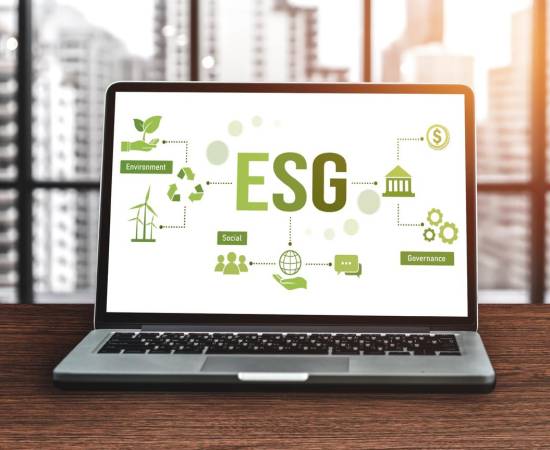
Make ESG Reporting More Assurance-Ready

Preparing supporting documentation after a sustainability report has been completed can create additional work for reporting teams.
EcoActive helps organizations build assurance readiness into the ESG reporting process by maintaining:
- Defined data ownership
- Source documentation
- Supporting evidence
- Validation records
- Review history
- Approval workflows
- Version history
- Traceable changes
This provides internal reviewers and assurance teams with a clearer view of how reported information was prepared.
The IAASB’s ISSA 5000 applies to sustainability assurance engagements across sustainability topics and reporting frameworks.
EcoActive supports the reporting process and assurance readiness; the independent assurance conclusion remains the responsibility of the appointed assurance provider.
Connect Financial and ESG Reporting
Financial and sustainability reporting are becoming more connected.
Sustainability-related risks and opportunities can be relevant to financial reporting, while climate-related assumptions, governance, management review and reporting timelines may intersect across finance and sustainability teams.
EcoActive brings financial and ESG disclosure management together on one platform.
This allows organizations to manage both reporting domains within a connected environment while maintaining the workflows, controls and reporting requirements specific to each. Explore Financial Disclosure Management Software.

Why Choose EcoActive's ESG Reporting Software?
01
AI-Native Architecture
AI is embedded within the reporting process rather than added as a separate layer around isolated reporting tasks.
02
End-to-End ESG Reporting
Manage the process from reporting requirements and materiality through data collection, validation, disclosures, review and final report generation.
03
Financial + ESG Disclosure Management
Manage financial and sustainability disclosure processes within one connected platform.
04
Governed by Design
Maintain defined ownership, evidence, validation, review, approval and traceability throughout the reporting cycle.
05
Multi-Jurisdiction Reporting
Manage ESG reporting requirements across different standards, regulations and jurisdictions while reusing common information where appropriate.
06
Built for Audit and Assurance Readiness
Maintain the supporting record behind ESG disclosures throughout the reporting process rather than reconstructing it at the end.
Frequently Asked Questions About ESG Reporting Software
What is ESG reporting software?
ESG reporting software helps organizations collect, manage, validate, review and disclose environmental, social and governance information.
Enterprise ESG reporting software can also connect reported information to supporting data, evidence, reporting requirements, review workflows and approvals, creating greater traceability throughout the sustainability reporting process.
What does ESG reporting software do?
ESG reporting software can support data collection, validation, materiality assessment, emissions reporting, target management, disclosure preparation, review, approval and report generation.
More advanced platforms can also maintain the relationship between reporting requirements, ESG data, evidence and final disclosures.
What is the difference between ESG reporting and sustainability reporting?
ESG reporting and sustainability reporting are often used to describe closely related reporting processes.
The terminology used may depend on the regulation, standard or organization. Increasingly, formal sustainability reporting requirements focus on structured disclosures about impacts, risks, opportunities, metrics, targets and sustainability-related financial information.
Which ESG reporting requirements does EcoActive support?
EcoActive supports reporting processes across requirements including ESRS, ISSB IFRS S1 and IFRS S2, SASB, BRSR, UK SRS, California climate reporting requirements and other applicable jurisdiction-specific mandates.
Can ESG reporting software support multiple reporting requirements?
Yes.
A connected ESG reporting platform can enable organizations to manage common sustainability information centrally and connect approved data and evidence to different reporting requirements, reducing unnecessary duplication across reporting processes.
How does EcoActive help with ESG data management?
EcoActive enables teams to assign structured data requests, define ownership, track submissions, validate information and maintain supporting evidence within the reporting process.
This helps organizations move away from ESG data collection that depends heavily on disconnected spreadsheets, files and email exchanges.
How does AI support ESG reporting?
AI can assist with repeatable ESG reporting activities including identifying missing information, detecting inconsistencies, supporting disclosure preparation, finding reporting gaps and coordinating reporting activities.
EcoActive uses an AI-native architecture while keeping materiality, interpretation, professional judgment and final approval subject to human review.
Can EcoActive support ESG assurance?
EcoActive supports assurance readiness by maintaining source information, evidence, validation records, review history, approvals and traceability behind reported information.
Independent assurance remains the responsibility of the organization’s appointed assurance provider.
Can EcoActive manage financial and ESG reporting together?
Yes.
EcoActive provides financial and ESG disclosure management within one platform, allowing organizations to connect reporting processes while maintaining the requirements, controls and responsibilities specific to each domain.
Is EcoActive suitable for global ESG reporting?
EcoActive is designed for organizations managing sustainability reporting requirements across multiple jurisdictions, including ESRS, ISSB-aligned requirements, BRSR, UK SRS and applicable US state-level climate reporting requirements.
Bring Your ESG Reporting Process Together
Move from fragmented data collection and disconnected reporting activities to an ESG reporting process that connects:
Requirements, data, evidence, disclosures, reviews, approvals and final reporting.
See how EcoActive’s AI-native ESG reporting software can help your teams reduce manual work, strengthen governance and manage increasingly complex sustainability reporting requirements.