Brussels, 30 July 2025 – The European Commission has released a recommendation introducing a Voluntary Sustainability Reporting Standard for Small and Medium-sized Enterprises (VSME). Developed by EFRAG, this new standard is designed to simplify and harmonize how non-listed SMEs report on sustainability matters—particularly when responding to requests from large corporations and financial institutions.
Read…

When it comes to ESG, most companies are focused on measuring the now —carbon footprints, diversity metrics, water usage. But in 2025 and beyond, the real differentiator isn’t just what you measure— it’s how well you anticipate the future.
That’s where scenario analysis comes in.
What Is Scenario Analysis?
Scenario analysis and planning…
The Science Based Targets initiative (SBTi) has released its finalized Financial Institutions Net-Zero (FINZ) Standard, the first global framework to guide banks, asset owners, asset managers, insurers, and other financial institutions in aligning their lending, investing, insurance, and capital markets activities with net-zero emissions by 2050.
What Is the SBTi?
Launched in 2015, the…
California regulators have released a detailed Frequently Asked Questions (FAQ) document to assist companies in preparing for the state’s upcoming mandatory climate disclosure requirements under two climate-related laws: the Climate Corporate Data Accountability Act (SB 253) and the Climate-Related Financial Risk Disclosure Act (SB 261).
What the FAQ Covers
SB…
The Global Reporting Initiative (GRI) has released its Textiles and Apparel Sector Standard exposure draft, aimed at improving sustainability disclosures in industries including textile, apparel, footwear, and jewellery.
What’s Covered in the Draft
Scope: Targets companies in the textile, apparel, footwear, and jewellery sectors.
Material Topics: Proposes 18 key disclosures, including…
As ESG reporting moves from a voluntary exercise to a regulated, investor-critical function, sustainability teams are facing increasing pressure to deliver disclosures that are accurate, comprehensive, and aligned with evolving global standards.
Frameworks like GRI 2025, ISSB’s S1/S2, and other emerging mandates demand more than just well-meaning narratives—they require structured data, comparability, and…
A few years ago, if you said “sustainability reporting” at a board meeting, you'd probably get a few nods and a polite “we’ll look into it.” Fast forward to today—and it’s at the center of some of the biggest decisions companies are making.
But here’s what’s interesting: the most forward-looking businesses aren’t just reporting to…
The UK has stepped forward with its draft sustainability and climate reporting standards, and while they mirror global frameworks, there’s a local flavor to how the UK is planning to roll things out.
On June 25, the UK government introduced:
UK SRS S1: General sustainability-related financial disclosures
UK SRS S2: Climate-related disclosures…
If you've ever felt like ESG reporting is a maze of overlapping frameworks, you're not alone. But the Global Reporting Initiative (GRI) just dropped a major update that could help clear the path.
On June 26, GRI launched two new standards:
GRI 102: Climate Change
GRI 103: Energy
These aren’t minor tweaks. They…
Why ESG Frameworks Matter More Than Ever in 2025
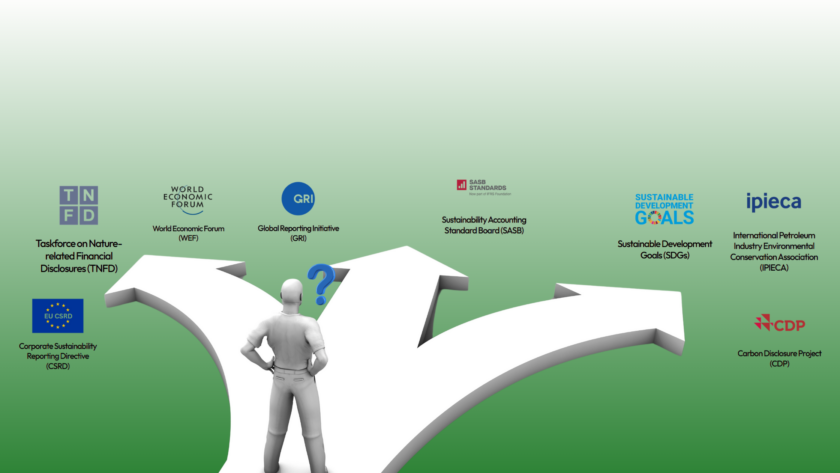
Let’s face it—navigating ESG frameworks in 2025 feels a bit like decoding a foreign language. Between CSRD, GRI, SASB, TCFD, ISSB, BRSR, and now TNFD, most companies are asking the same question: Which one actually fits our business—and how do we keep up without losing…
According to a February 2024 study by the International Federation of Accountants (IFAC), a remarkable 98% of the world’s largest companies now issue sustainability reports—an increase from 91% in 2019—and 69% of them obtained assurance on at least some ESG disclosures ifac.org. These figures highlight an unmistakable shift: ESG reporting is not just widespread—it’s mature…