Skip to content Skip to sidebar Skip to footer
Choosing the right ESG Framework or standard

Choosing the Right ESG Framework: A 2025 Guide to CSRD, SASB, TCFD & more

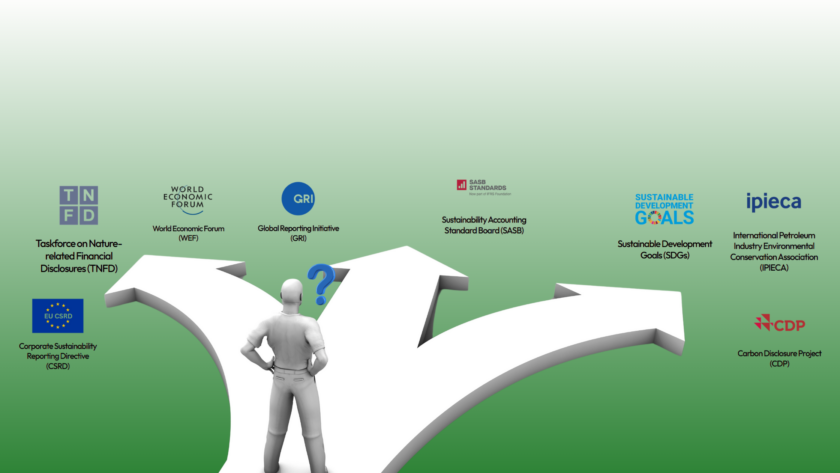
Last updated: 6 November 2026 Choosing the right ESG framework starts with understanding which sustainability reporting requirements apply to your organisation, what information stakeholders need, and how different standards address materiality, industry risks and disclosure obligations. The most relevant ESG reporting frameworks and standards include the European Sustainability Reporting Standards (ESRS) under the Corporate Sustainability Reporting…

Read More

14 Must-Haves That Set the Best ESG Management Software Apart

14 Must-Haves That Set the Best ESG Management Software Apart

According to a February 2024 study by the International Federation of Accountants (IFAC), a remarkable 98% of the world’s largest companies now issue sustainability reports—an increase from 91% in 2019—and 69% of them obtained assurance on at least some ESG disclosures ifac.org. These figures highlight an unmistakable shift: ESG reporting is not just widespread—it’s mature…

Read More

The Future is Circular: Key Trends Driving the Transition from Linear to Circular Systems

Circular economy trends in 2026 point to a shift from managing waste after disposal to designing products, supply chains and business models that retain material and product value. Key developments include circular product design, repair and reuse, digital product information, extended producer responsibility, and better measurement of material flows. The transition from linear to circular…

Read More

From Policy to Practice: Implementing Human Rights Due Diligence in Your Supply Chain

The Strategic Importance of Human Rights Due Diligence (HRDD) Respecting human rights across supply chains has become a strategic and legal necessity for businesses worldwide. With increasing scrutiny from investors, consumers, regulators, and civil society, companies are expected to demonstrate accountability for the social and ethical impacts of their operations. Human Rights Due Diligence (HRDD) provides a…

Read More

Australia’s New Climate Reporting Laws_ What Businesses Need to Know and How to Stay Compliant

Australia Takes a Bold Step Towards Climate Transparency with New Sustainability Reporting Law Australia has taken a significant leap forward in corporate sustainability with the finalization of a groundbreaking law aimed at enhancing transparency in climate-related financial reporting. The Treasury Laws Amendment (Financial Market Infrastructure and Other Measures) Act 2024 has officially received Royal Assent, marking…

Read More

Revolutionizing ESG Reporting with AI: Opportunities and Challenges

ESG reporting has emerged as a critical component of corporate strategy and stakeholder engagement. With increasing regulatory scrutiny, investor expectations, and societal demand for transparency, ESG disclosures now play a central role in assessing an organization’s long-term sustainability and ethical performance. As the scope and complexity of ESG data continue to expand, organizations are facing growing…

Read More

Navigating the CSRD Omnibus: Essential Insights for Businesses

The CSRD Omnibus is a significant update to the Corporate Sustainability Reporting Directive (CSRD), aimed at simplifying and refining sustainability reporting requirements for businesses operating within the European Union (EU). As the regulatory landscape evolves, it is crucial for companies to stay informed about these changes and understand their implications for corporate sustainability disclosure. CSRD Omnibus…

Read More

The 5 Main Challenges of ESG Reporting and Best Practices

Last updated: 6 November 2026 ESG reporting presents five major challenges for organisations: navigating multiple reporting standards, keeping pace with regulatory changes, collecting reliable ESG data, ensuring disclosure accuracy and assurance readiness, and coordinating reporting across business functions. These challenges are closely connected. Inconsistent data collection can create validation issues, unclear responsibilities can delay approvals, and…

Read More

The Role of Board Oversight in ESG – A 2025 Perspective

Last updated: 6 November 2026 Board oversight in ESG is the responsibility of a company's board of directors, or its equivalent governing body, to oversee how relevant environmental, social and governance matters are considered in corporate strategy, risk management, decision-making and disclosures. The board sets the direction and challenges management; management remains responsible for implementing policies,…

Read More

Navigating New Carbon Reporting Standards: What Businesses Need to Know in 2025

In 2025, businesses are navigating a landscape of evolving carbon reporting standards designed to enhance transparency and accountability in disclosing environmental impacts. These changes are more than regulatory requirements; they represent a critical opportunity for organizations to demonstrate leadership in sustainability. By aligning with these updated standards, businesses can not only ensure compliance but also…

Read More

Climate Disclosure Trends: What the SEC’s 2025 Climate Rules Mean for You

Introduction to SEC Climate Disclosure Rules The U.S. Securities and Exchange Commission (SEC) has announced significant updates to its climate-related disclosure rules, effective starting in 2025. These new regulations will require public companies to provide more comprehensive, standardized, and reliable information regarding their climate risks, greenhouse gas (GHG) emissions, and governance related to climate change. The SEC’s…

Read More